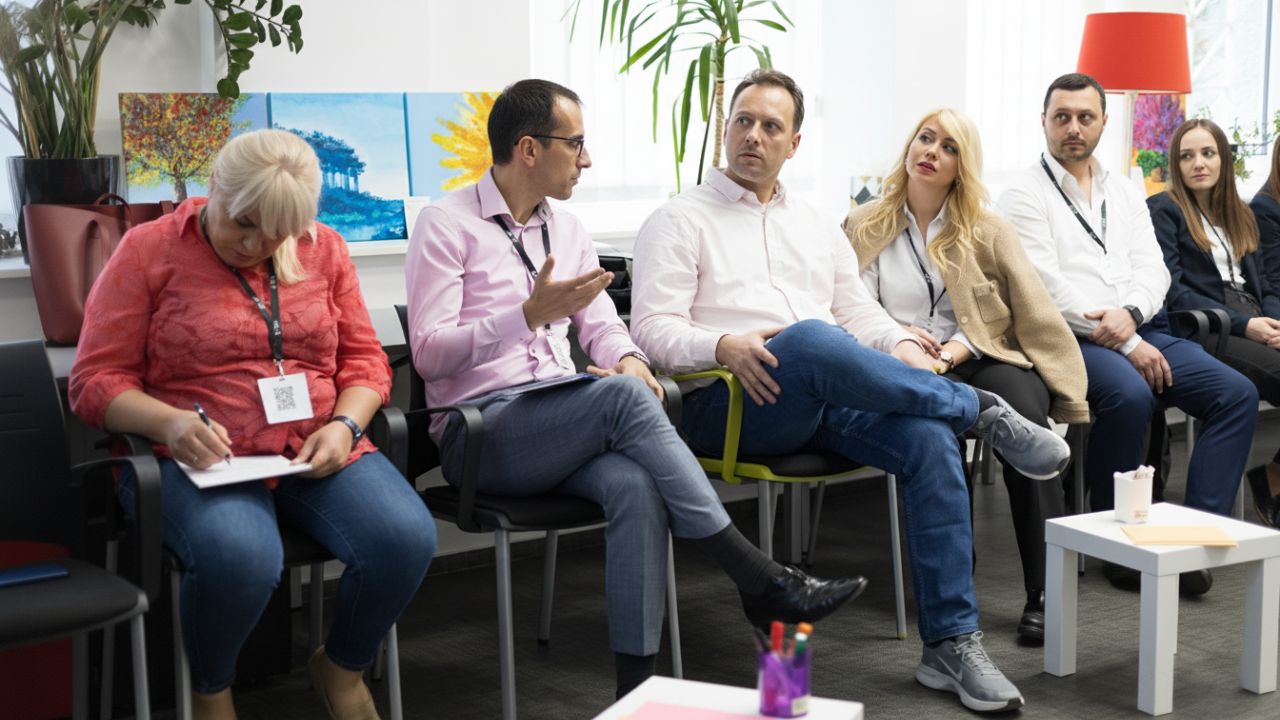
Most People React Wrong in This Situation. Here’s the #1 Right Way to Respond
Someone just disrespected you in front of your entire team. Your idea got mocked. Your work got dismissed. And now everyone is watching to see what you’ll do next.
Most people freeze up or get angry. But there’s a better way.
This guide will show you three manipulative tactics people use in meetings, how to spot them in real time, and exactly what to say to handle disrespect in Scrum meetings without looking defensive. You’ll learn to recognize each tactic, see them play out in a real Sprint Review scenario, and get word-for-word responses you can use to defend yourself professionally.
What Are the Three Manipulative Tactics Used in Business Meetings?
Tactic 1: The Social Isolation Threat
This is when someone connects your behavior to being disliked by others.
What it sounds like:
- “That’s probably why people don’t want to work with you.”
- “This explains why your last team requested transfers.”
- “No wonder you eat lunch alone.”
Why manipulators use this:
It makes you look socially rejected. Even if it’s not true, the seed is planted. Other people start wondering if there’s truth to it. According to research on social dynamics and workplace conflict, public accusations of social rejection can damage reputation even when unfounded (Cialdini, 2006).
The goal: Make you look like the office outcast so people distance themselves from you.
Tactic 2: The Pattern Accusation
This is when someone takes one incident and claims it’s part of a bigger pattern of bad behavior.
What it sounds like:
- “Is this how you treat everyone or just me?”
- “This isn’t the first time you’ve done this.”
- “You always miss deadlines, don’t you?”
Why manipulators use this:
It reframes one mistake as evidence of chronic problems. Now people are mentally reviewing every interaction they’ve had with you, looking for patterns. Social psychology research shows that pattern accusations trigger confirmation bias in observers during professional communication (Nickerson, 1998).
The goal: Make one issue look like proof you’re always the problem.
Tactic 3: The Secret Reputation Damage
This is when someone claims that others have been complaining about you behind your back.
What it sounds like:
- “I’ve heard people talk about this side of you.”
- “Others have mentioned this to me privately.”
- “Multiple people have said the same thing about working with you.”
Why manipulators use this:
It suggests a hidden consensus against you. People assume where there’s smoke, there’s fire. Studies on social proof and meeting dynamics show that perceived group consensus strongly influences individual judgment (Asch, 1956).
The goal: Isolate you by suggesting everyone already thinks you’re the problem.
How Do These Tactics Play Out in a Real Sprint Review Meeting?
Let me show you how these tactics play out in a real business situation with team leadership dynamics.
The Setup:
You’re the Scrum Master presenting your team’s Sprint Review. Your team delivered 7 out of 10 story points this sprint because you discovered a critical bug in the production environment that needed immediate attention.
You explain this to the stakeholders, showing how the team made a smart trade-off between new features and system stability.
The Attack Begins:
Jennifer (a manager from another department) interrupts you:
“Interesting approach. Maybe that’s why I keep hearing concerns about your team’s reliability.” (Tactic 3: Secret Reputation Damage)
You start to respond, but she continues.
“This is the third sprint you’ve missed your commitment. Is this a pattern with all your projects or just this one?” (Tactic 2: Pattern Accusation)
The room gets quiet. A few stakeholders look uncomfortable. Jennifer leans back in her chair.
“I’m just saying what others are thinking. No wonder stakeholders prefer working with the other Scrum teams.” (Tactic 1: Social Isolation Threat)
What just happened:
In under 30 seconds, Jennifer used all three tactics. She questioned your reputation, suggested a pattern of failure, and implied other people already avoid working with you.
If you get defensive, you look guilty. If you stay silent, you look weak. If you attack back, you look unprofessional.
So what do you do?
How Do You Respond to Social Isolation Threats in Meetings?
What Jennifer said:
“No wonder stakeholders prefer working with the other Scrum teams.”
Your response:
“Jennifer, I’d like to understand your specific concerns. Can you tell me which stakeholders said this and what their concerns were? I want to address any real issues.”
Why this works:
You’re calling for specifics. Manipulators rely on vague accusations. When you ask for details, they either have to make something up (which exposes them) or admit they’re exaggerating.
You stay calm and professional. You show you’re willing to address real problems through assertive communication. And you subtly reveal that they might be making things up.
Research on confronting manipulative communication and workplace conflict shows that requests for specific evidence often expose baseless claims (Burgeon & Buller, 1996).
Alternative response if they can’t provide specifics:
“I appreciate the feedback, but without specific examples, I can’t address your concerns. If anyone has issues with our team’s work, I encourage them to bring it directly to me.”
What’s the Best Way to Counter Pattern Accusations?
What Jennifer said:
“This is the third sprint you’ve missed your commitment. Is this a pattern with all your projects or just this one?”
Your response:
“Let me provide context. In the past three sprints, we’ve delivered 94% of committed story points. This sprint, we made a documented trade-off to fix a production bug that was causing customer complaints. I’d be happy to share our decision matrix and the bug severity data after this meeting.”
Why this works:
You provide data instead of emotions. You show the big picture instead of focusing on one sprint. You demonstrate that decisions were thoughtful and documented through proper stakeholder management.
You also reframe “missed commitment” as “made a smart trade-off.” That’s not spin. That’s how Agile actually works.
Organizational psychology research demonstrates that data-driven responses are significantly more credible than emotional defenses in conflict resolution (Cialdini, 2006).
Key principle:
Pattern accusations need pattern data to counter them. One data point isn’t a pattern.
How Should You Handle Secret Reputation Damage Claims?
What Jennifer said:
“Maybe that’s why I keep hearing concerns about your team’s reliability.”
Your response:
“I haven’t received any direct feedback about reliability concerns. If you’ve heard specific issues, I’d appreciate you sharing them with me directly, or encouraging those people to do so. I want to make sure we’re addressing real problems, not assumptions.”
Why this works:
You’re exposing the manipulation. You’re saying, “If this is real, let’s deal with it properly. If it’s gossip, let’s stop spreading it.”
You’re also putting responsibility back on Jennifer. She either needs to provide real feedback or admit she’s spreading rumors about professional communication.
Studies on workplace gossip show that calling for direct communication often stops manipulative indirect criticism (Grosser et al., 2010).
Then immediately redirect:
“For this meeting, let’s focus on the sprint results and next steps. I’m available after to discuss any other concerns.”
Why the redirect matters:
You don’t let the meeting get derailed. You show leadership by getting things back on track and maintaining psychological safety for your team.
What Long Term Strategies Protect You From Future Manipulation?
Defending yourself once isn’t enough. You need a strategy to prevent these attacks from happening again.
Why Is Documentation Your Best Defense Against Manipulation?
Keep records of:
- Sprint commitments and actual delivery
- Reasons for any changes or trade-offs
- Stakeholder feedback (positive and negative)
- Team decisions and the reasoning behind them
Why this matters:
When someone makes vague accusations, you can respond with specific data. Documentation is your shield against pattern accusations in workplace conflict situations.
How Do You Build Stakeholder Relationships That Protect Your Reputation?
Don’t let one person control the narrative about your work.
Action steps:
- Send regular updates to stakeholders
- Invite stakeholders to Sprint Reviews personally
- Ask for feedback directly
- Share wins and challenges transparently
Why this matters:
When stakeholders know your work firsthand through effective stakeholder management, they won’t believe secondhand gossip about you.
Should You Address Manipulation Publicly or Privately?
If someone repeatedly uses these tactics against you, don’t fight every battle publicly.
Better approach:
“Jennifer, I noticed you’ve raised concerns about the team’s reliability in the past few meetings. I’d like to understand your perspective. Can we schedule 30 minutes to talk?”
Two outcomes:
- She has legitimate concerns you can address.
- She’s just being manipulative, and calling a private meeting exposes that.
Either way, you look professional and solution-focused in your conflict resolution approach.
When Should You Escalate Workplace Manipulation?
If someone continues using manipulative tactics after you’ve tried to resolve it directly, it’s time to involve leadership.
When to escalate:
- The behavior continues after direct conversation
- It’s affecting team morale or productivity
- Multiple people are experiencing the same treatment
- The person holds power over your career
How to escalate effectively:
Don’t complain. Bring data.
“I want to bring a pattern to your attention. Over the past six weeks, Jennifer has publicly questioned our team’s reliability in four different stakeholder meetings. I’ve addressed her concerns directly with data each time, and I’ve invited her to discuss issues privately. The behavior continues. I’m concerned this is creating tension with other stakeholders and affecting our team’s ability to work effectively.”
How Do You Build Team Resilience Against Manipulation?
Make sure your team knows you’ll protect them from these tactics too. This builds psychological safety and strengthens meeting dynamics.
In your retrospectives:
“If anyone ever experiences public disrespect or manipulation in meetings, I want to know about it. We’ll address it together.”
Why this matters:
A strong team with clear workplace boundaries is harder to manipulate. When people know they’re supported, they’re less vulnerable to isolation tactics.
Frequently Asked Questions About How to Handle Disrespect in Scrum Meetings
What should I do if someone publicly disrespects me in a Sprint Review?
Stay calm and ask for specific details. Respond with data instead of emotions. Use phrases like “Can you tell me which stakeholders said this?” to expose vague accusations. Then redirect the conversation back to the meeting agenda.
How can I tell if someone is using manipulation tactics against me in meetings?
Watch for three patterns in workplace conflict: vague accusations about your reputation, claims that one mistake is part of a bigger pattern, and suggestions that others have complained about you privately. These are classic manipulation tactics.
Should I respond to disrespect immediately or wait until after the meeting?
Respond immediately but briefly. Use assertive communication to address the issue without letting it derail the meeting. Say something like “I’d be happy to discuss your concerns after this meeting” and then continue with your presentation.
What if the manipulative person is my manager or product owner?
Document everything, build relationships with other stakeholders, and maintain professional communication. If the pattern continues and affects your work or team morale, consider escalating to HR with documented examples.
Is it unprofessional to call out manipulation in a Scrum meeting?
Not if you do it calmly and ask for specifics. Asking “Can you tell me which stakeholders said this?” is professional conflict resolution. Getting angry or defensive is not. Focus on facts and redirect to productive discussion.
How do I protect my team from manipulation in Sprint Reviews?
Create clear workplace boundaries and meeting dynamics. Address disrespect immediately. Build psychological safety by letting your team know you’ll support them if they experience manipulation. Document everything and escalate patterns when necessary.
What documentation should I keep to protect myself from false accusations?
Keep records of sprint commitments, actual delivery, trade-off decisions, stakeholder feedback, and team decisions with reasoning. This creates a data shield against pattern accusations in stakeholder management situations.
Can asking for specifics backfire if the person actually has examples?
No. If they have legitimate concerns, that’s valuable feedback you can address. If they don’t have specifics, you’ve exposed the manipulation. Either way, asking for details is the right move in professional communication.
How do I know when workplace manipulation requires HR involvement?
Escalate when the behavior continues after direct conversation, affects team productivity, involves multiple people, or when the person has power over your career. Always bring documented examples of the pattern.
What if I freeze up in the moment and can’t think of what to say?
Practice responses ahead of time. Even saying “That’s an interesting perspective. Let me think about that and we can discuss it after the meeting” buys you time while showing you’re not rattled. The key is staying calm, not having a perfect response.
Your Next Steps for Handling Disrespect in Scrum Meetings
Learning to recognize and counter manipulative tactics isn’t about playing games. It’s about protecting yourself and your team from people who use psychology as a weapon in workplace conflict.
The next time someone tries to publicly undermine you in a Sprint Review or business meeting:
- Recognize which tactic they’re using
- Stay calm and ask for specifics
- Provide data instead of emotions
- Redirect the conversation back to productive topics
- Follow up strategically
You deserve to work in an environment where ideas are debated on merit, not where people use psychological tricks to win arguments. Effective stakeholder management means maintaining professional communication even when others don’t.
Master these defensive strategies for assertive communication, and you’ll never be caught off guard again.
Ready to Protect Yourself in Your Next Meeting?
Save this guide. Print it. Keep it nearby. The next time someone tries to manipulate you in a Sprint Review or business meeting, you’ll know exactly how to handle disrespect in Scrum meetings.
Your action plan:
- Review the three manipulation tactics again today
- Identify which ones you’ve experienced in your workplace
- Practice the counter responses out loud with a colleague
- Share this guide with your Scrum team to build collective psychological safety
Have you experienced these tactics in your Sprint Reviews or business meetings? What worked for you? What would you add to this list? Share your story in the comments below.
Building strong meeting dynamics and workplace boundaries takes practice. But every time you successfully counter manipulation with calm, data-driven responses, you make your workplace a little bit better for everyone.
References:
Asch, S. E. (1956). Studies of independence and conformity: A minority of one against a unanimous majority. Psychological Monographs: General and Applied, 70(9), 1-70.
Burgoon, J. K., & Buller, D. B. (1996). Interpersonal deception theory. Communication Theory, 6(3), 203-242.
Cialdini, R. B. (2006). Influence: The psychology of persuasion. Harper Business.
Grosser, T. J., Lopez-Kidwell, V., & Labianca, G. (2010). A social network analysis of positive and negative gossip in organizational life. Group & Organization Management, 35(2), 177-212.
Nickerson, R. S. (1998). Confirmation bias: A ubiquitous phenomenon in many guises. Review of General Psychology, 2(2), 175-220.
About the Author:
Dejan Majkic is creator of WhatIsScrum.org, where he has trained over 140,000 students in Scrum, Agile methodology, and project management. With 70+ professional certifications and a Master’s degree in Computer Science, he specializes in helping teams navigate workplace conflict and build high performing Agile organizations.
